Engine Bay Diagrams
Choose your vehicle to view a labelled engine-bay diagram and revise the under-bonnet checks that may be included in your practical driving test.
Master your under-bonnet checks
The practical driving test may include a question requiring you to open the bonnet and identify the engine oil, coolant or brake-fluid reservoir.
The exact layout varies between vehicles, so use the diagram for the car you expect to take to your test.
Identify the dipstick or electronic oil-level system.
Locate the expansion tank and its level markings.
Find the reservoir and check the minimum and maximum marks.
Hybrid and electric-vehicle safety
Many modern tuition cars use hybrid systems. Bright orange cables usually identify high-voltage components.
Do not touch, disconnect or interfere with high-voltage cables or components. For test preparation, you only need to identify the normal fluid-checking points shown by your instructor.
Choose an engine-bay diagram
Open the vehicle guide that best matches the car you use during lessons.
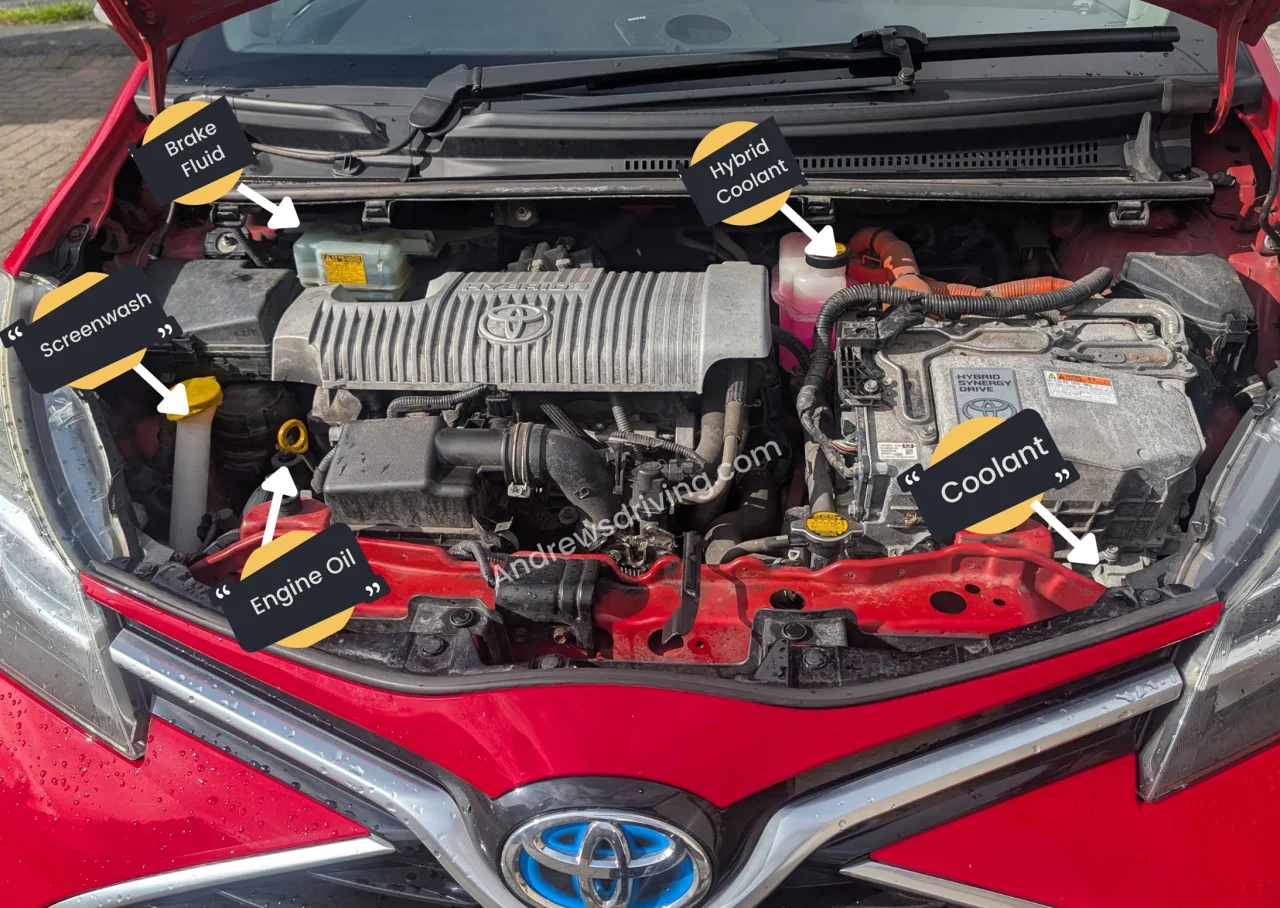
Toyota Yaris 1.5 Hybrid
View the engine oil, coolant, brake-fluid and screenwash locations.
Open the diagram →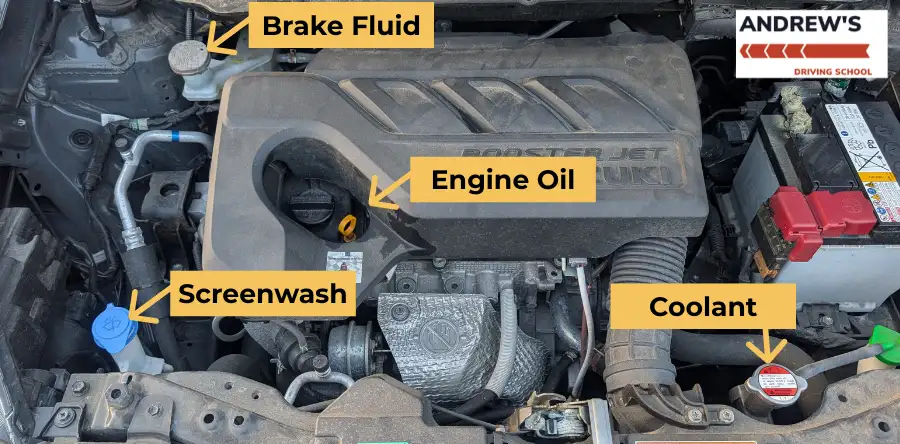
Suzuki Swift BoosterJet
Identify the main under-bonnet fluid checks in the BoosterJet model.
Open the diagram →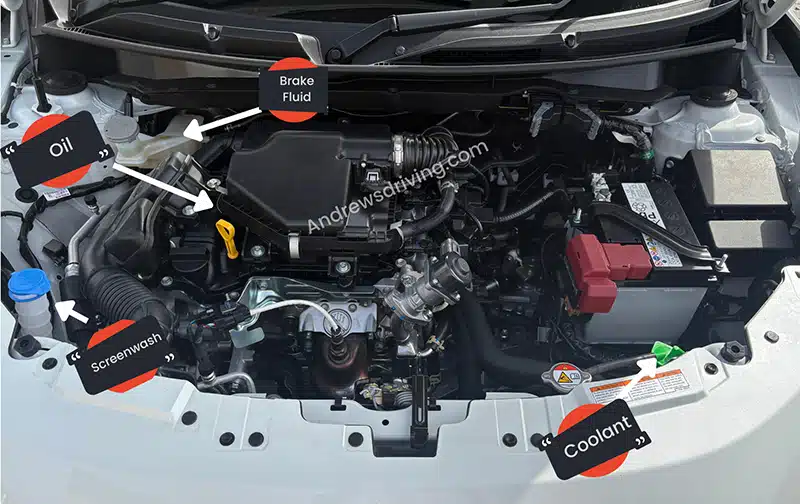
Suzuki Swift 1.2 Mild Hybrid Motion
Revise the engine-bay layout for the 1.2 Mild Hybrid Motion.
Open the diagram →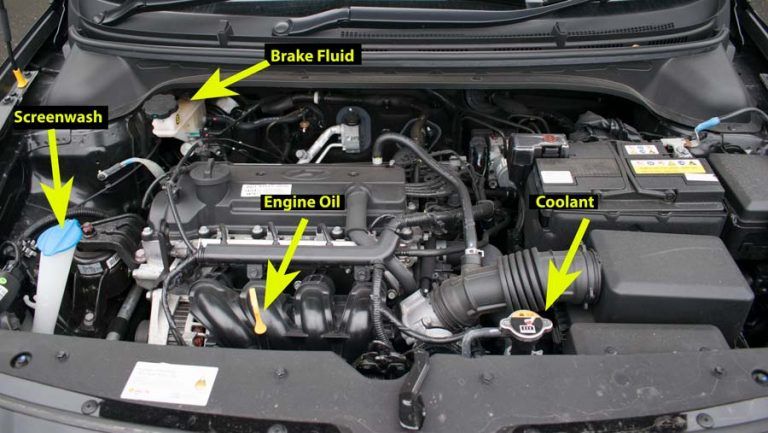
Hyundai i20
Locate the main fluids and under-bonnet components in the Hyundai i20.
Open the diagram →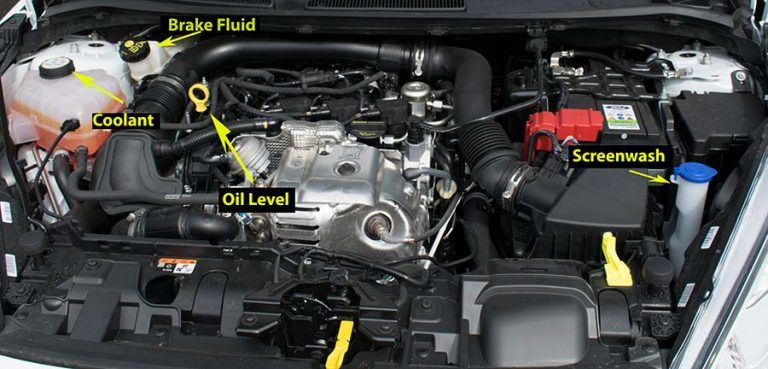
Ford Fiesta 1.0 EcoBoost
Review the oil, coolant, brake-fluid and screenwash locations.
Open the diagram →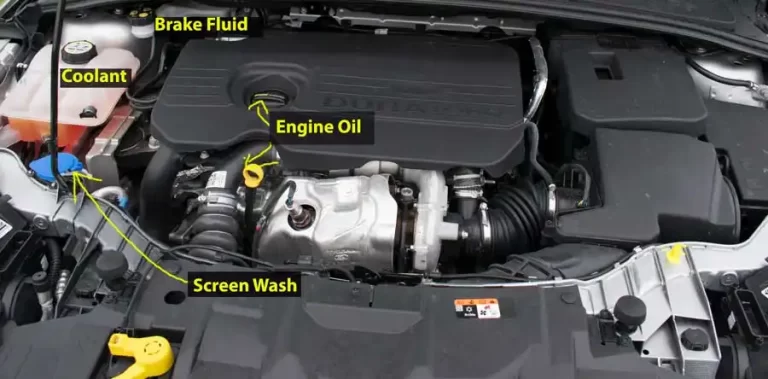
Ford Focus 1.5 TDCi
Identify the main engine-bay checking points in the diesel Ford Focus.
Open the diagram →How to use these diagrams
Use the images to learn the general location and appearance of each component, but also practise with your instructor’s actual car.
Open the correct guide
Choose the model that matches, or most closely resembles, your tuition vehicle.
Learn the component names
Be able to identify the oil, coolant and brake-fluid checking points.
Practise with your instructor
Open the bonnet and point to each component in the real vehicle.
Explain the check clearly
Practise describing how you would check the level safely.
Vehicle layouts can vary
Engine-bay layouts may differ by model year, engine type, trim level or hybrid system. Use these diagrams as learning guides and confirm the exact locations in your own test vehicle.