What Happens on Your First Driving Lesson?
Your first lesson is designed to be calm, safe and encouraging. Here is exactly what to expect, what to bring and how your instructor will help you get moving.
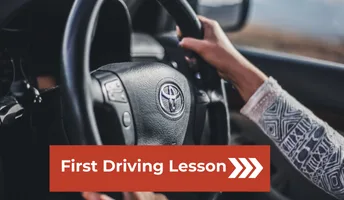
Make sure you are legal to drive
Your instructor must complete a few checks before you get behind the wheel.
Correct age
You normally need to be at least 17 to learn in a car, or 16 if you receive the qualifying mobility component of Personal Independence Payment.
Valid provisional licence
Bring your physical provisional driving licence so your instructor can check it before the lesson starts.
Eyesight check
You must be able to read a number plate from 20 metres away. Wear your glasses or contact lenses if needed.
A relaxed start, not a leap into traffic
Your instructor will collect you from the agreed location, introduce themselves and explain how the lesson will work. They will usually drive you to a quiet area where you can learn the basics without busy traffic piling on the pressure.
Andrew’s Driving School does not use piggybacking on first lessons. Your lesson time is yours, so you can settle in without another pupil in the car.
What you will usually cover
Licence and eyesight checks
Your instructor checks your provisional licence and asks you to read a number plate from the required distance.
Drive to a quiet location
Your instructor normally drives first so you can begin somewhere calm and suitable.
Cockpit drill
You learn how to set up the doors, seat, steering, seatbelt and mirrors using DSSSM.
Car controls
Your instructor introduces the pedals, gears, handbrake, indicators, lights, wipers and demister.
Move off and stop
You practise preparing the car, observing properly, moving away and stopping safely.
Lesson recap
You finish with feedback, a summary of your progress and a plan for the next lesson.
DSSSM sets the car up safely
Your instructor will guide you through every adjustment. The aim is to make sure you can reach the controls comfortably, see clearly and sit in a safe driving position.
Your instructor introduces the car
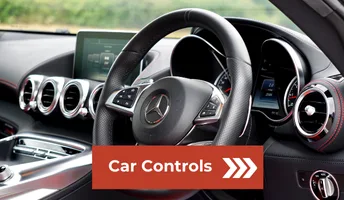
Major controls
Clutch, brake, accelerator, gear stick and handbrake. These make the car move, slow down and stop.
Minor controls
Indicators, headlights, wipers, hazard lights, heater and demister. You will learn where they are and when to use them.
Moving off and stopping
Most first lessons include genuine hands-on driving in a quiet area.
Prepare, Observe, Move
- Prepare: clutch down, first gear, set the gas and find the biting point.
- Observe: check mirrors and blind spots.
- Move: release the handbrake and move away smoothly.
Mirror, Signal, Position, Speed, Look
- Check behind before changing speed or position.
- Signal if another road user would benefit.
- Slow down smoothly and stop in a safe position.
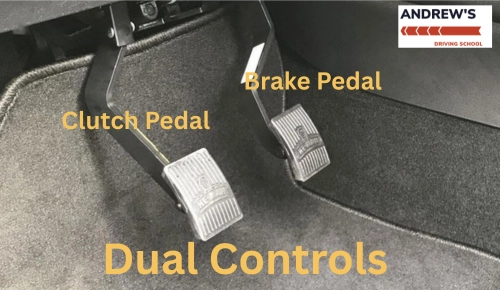
Your instructor can help immediately
Dual controls allow your instructor to use an additional brake and, in many manual cars, an additional clutch. They can intervene if needed while you concentrate on learning.
Usually 1.5 to 2 hours
A longer first session gives enough time for the legal checks, cockpit drill, controls and repeated moving-off and stopping practice without rushing.
Typical first-lesson duration at Andrew’s Driving School.
Your first-lesson checklist
Provisional licence
Bring the physical photocard.
Suitable footwear
Wear comfortable, flat shoes that let you feel the pedals.
Glasses or contacts
Bring them if required for the eyesight standard.
Water and confirmation
A drink and your booking details can be useful.
That is completely normal
Your instructor expects first-lesson nerves. Ask questions, take your time and focus on one small task at a time. The car will be in a quiet area and your instructor can intervene through the dual controls.
Your instructor plans the next step
You will discuss what went well and what needs more practice. Future lessons may introduce junctions, hill starts, emerging into traffic and basic reversing.
First Driving Lesson FAQs
Will I actually drive on my first lesson?
Yes, most learners will practise moving off and stopping in a quiet area once the legal checks, cockpit drill and controls have been covered.
Do I need to bring my provisional licence?
Yes. Bring the physical provisional licence so your instructor can check it before you drive.
What happens during the eyesight check?
Your instructor will ask you to read a number plate from 20 metres away. Wear glasses or contact lenses if you need them.
How long is a first driving lesson?
At Andrew’s Driving School, a first lesson typically lasts between 1.5 and 2 hours.
What if I stall the car?
Stalling is normal for beginners. Your instructor will help you secure the car, restart and try again calmly.
Will I drive in busy traffic?
Usually not. Your instructor will normally begin in a quiet, suitable area and increase the difficulty gradually.
What should I wear?
Wear comfortable clothing and flat shoes that allow you to feel and operate the pedals accurately.
Book your first driving lesson
Start in a calm, supportive environment with a local instructor and a lesson planned around your pace.