What Is a Smart Motorway?
A smart motorway uses cameras, sensors, electronic signs and variable speed limits to manage traffic and respond to congestion or incidents. Some sections also use the hard shoulder as a traffic lane or operate without a permanent hard shoulder.
How Do Smart Motorways Work?
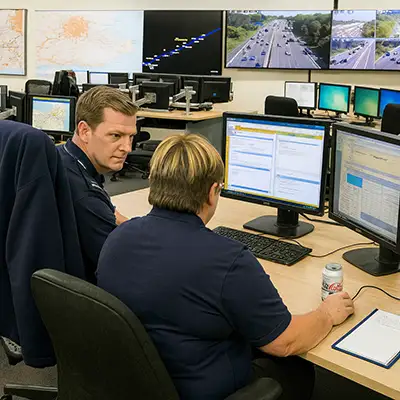
Smart motorways use overhead gantries, cameras, traffic sensors and control-room operators to monitor traffic conditions and manage the road.
Variable speed limits can be displayed to reduce congestion, smooth traffic flow or respond to an incident ahead. Lane-control signals can also close a lane when it is unsafe to use.
Drivers must follow the signs shown on the gantries, including mandatory speed limits and Red X signals.
What Makes a Motorway “Smart”?
The road is actively managed using technology and electronic signs. This allows speed limits, lane use and warnings to change according to traffic or safety conditions.
What Are the Different Types of Smart Motorway?
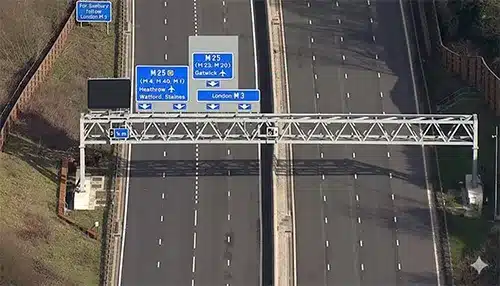
There are three main layouts: controlled motorways, dynamic hard shoulder motorways and all-lane-running motorways.
The biggest difference is how the hard shoulder is used. On some sections it remains available, on others it opens only when signs permit, and on all-lane-running sections it has been converted into a permanent traffic lane.
Drivers should use the road markings and overhead signs in front of them rather than relying on how another motorway section was arranged.
The Three Main Smart Motorway Layouts
Existing sections may use different systems, so look carefully at lane markings, gantry signs and whether a permanent hard shoulder is present.
Controlled Motorway
A controlled motorway normally retains a permanent hard shoulder and uses variable mandatory speed limits to manage traffic.
- The hard shoulder is not a normal driving lane.
- Electronic signs may change the speed limit.
- Lane closures can be shown using Red X signals.
- Use the hard shoulder only in an emergency or when directed.
Dynamic Hard Shoulder
The hard shoulder can be opened temporarily as a traffic lane when overhead signs show that it is available.
- Do not use it when the lane is shown as closed.
- A Red X means the lane must not be entered.
- Signs and signals determine whether it is available.
- The layout may change as traffic conditions change.
All-Lane Running
The former hard shoulder operates as a permanent traffic lane. A solid white line does not separate it from the other running lanes.
- Every lane is normally available for traffic.
- Emergency areas are provided beside the carriageway.
- Overhead signals can close a lane after an incident.
- Stopped-vehicle detection is installed on existing sections.
Drivers must continue to understand and follow the signs, speed limits, Red X signals and emergency procedures on the current network.
What Do Smart Motorway Signs Mean?
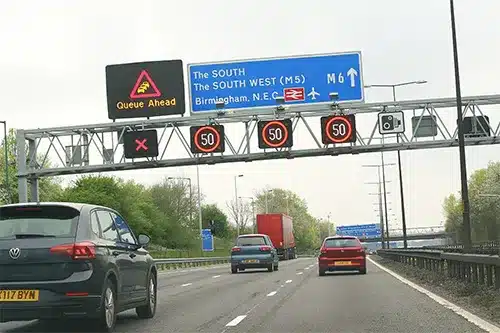
Overhead signs can display mandatory speed limits, warnings, lane closures and information about incidents ahead.
Conditions can change quickly, so check each gantry rather than assuming the previous instruction still applies.
A speed shown inside a red circle is a legal maximum. A Red X means the lane below it is closed and must not be used.
How Do Variable Speed Limits Work?
Variable speed limits may be introduced to reduce congestion, smooth traffic flow or protect drivers and workers near an incident.
When a speed is displayed inside a red circle, it is mandatory. Where no lower mandatory limit is displayed, the normal motorway limit applies unless another sign says otherwise.
What Does a Red X Mean?
A Red X above a lane means that lane is closed. Move into an open lane as soon as it is safe and do not pass beneath the Red X.
The lane may be closed because of a stopped vehicle, collision, debris, road workers or another hazard that is not yet visible.
What Is a Smart Motorway Emergency Area?
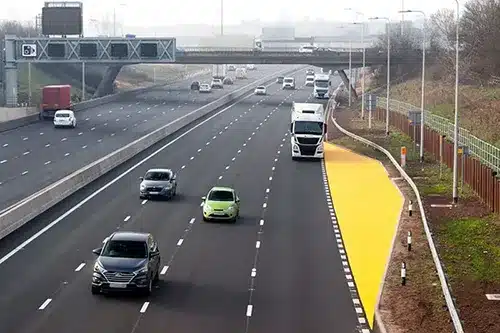
Emergency areas are marked stopping places beside the carriageway. They are designed for genuine emergencies on motorway sections where there is no permanent hard shoulder.
They are usually marked by blue signs and orange surfacing. A roadside emergency telephone is normally provided so the control centre can identify your location and give instructions.
Do not use an emergency area for rest breaks, phone calls or routine stops. Continue to a service area or leave the motorway when there is no emergency.
What Should You Do in an Emergency Area?
Pull as far into the area as possible, switch on the hazard warning lights and stop the vehicle. Where it is safe, leave through the door furthest from moving traffic.
Use the emergency telephone where one is provided. This gives the control centre your precise location and allows staff to advise you.
What if You Cannot Reach an Emergency Area?
When the vehicle can still move, try to leave the motorway or reach an emergency area, service area or other safer location.
When the vehicle stops in a live traffic lane and you cannot reach a safe place, switch on the hazard warning lights, keep seat belts fastened and call 999 immediately.
What Is Stopped-Vehicle Detection?
Stopped-vehicle detection uses roadside radar to identify vehicles that have stopped on all-lane-running motorway sections.
When the system detects a stationary vehicle, an alert is sent to a control-room operator. The operator can check the incident using cameras, close affected lanes and arrange assistance.
What Are Smart Motorway Cameras Used For?
Smart motorways use different camera systems for traffic monitoring, incident management and enforcement.
Cameras may support enforcement of variable mandatory speed limits and Red X lane closures. Drivers should follow every displayed signal rather than slowing only when they notice a camera.
Are New Smart Motorways Still Being Built?
Plans for new smart motorway schemes were cancelled in 2023 following concerns about cost and public confidence.
Existing smart motorway sections remain in operation and continue to be managed and improved. Drivers therefore still need to understand variable speed limits, Red X signals and emergency procedures.
What Should Learner Drivers Know About Smart Motorways?
Learner drivers may drive on motorways in England, Scotland and Wales only when accompanied by an approved driving instructor in a dual-controlled car.
Read signs early
Check gantries well ahead so you have time to adjust speed or move away from a closed lane safely.
Keep a safe following gap
Leave enough room to respond smoothly when traffic slows or signs change.
Plan lane changes
Use mirrors, signal when necessary and move progressively rather than making a rushed last-second change.
Obey every Red X
Leave the closed lane as soon as it is safe and never continue beneath the signal.
Know the emergency procedure
Understand how to use emergency areas and what to do if the vehicle stops in a live lane.
Stay calm when conditions change
Reduce speed smoothly, maintain awareness and follow the latest signs rather than copying surrounding traffic.
Smart Motorway FAQs
What is a smart motorway?
A smart motorway uses cameras, sensors, electronic signs and variable speed limits to manage traffic and respond to congestion, incidents and lane closures.
What does a Red X mean on a smart motorway?
A Red X means the lane below it is closed. Move into an open lane as soon as it is safe and do not continue beneath the signal.
Are smart motorway speed limits compulsory?
A speed displayed inside a red circle is a mandatory legal limit. Drivers must reduce speed and remain within the displayed limit.
What is an emergency area?
An emergency area is a marked stopping place beside the carriageway for genuine emergencies on sections without a permanent hard shoulder.
What should I do if my car stops in a live lane?
Switch on the hazard warning lights, keep seat belts fastened and call 999 immediately. Do not leave the vehicle when doing so would place you or passengers in greater danger.
Can I leave an emergency area without assistance?
Contact the control centre using the emergency telephone and follow the instructions given. The lane beside the area may need to be closed before you rejoin safely.
Are new smart motorways still being built?
Plans for new smart motorway schemes were cancelled in 2023. Existing smart motorway sections remain in use and drivers must continue following their signs and emergency procedures.
Can learner drivers use smart motorways?
Learner drivers may use motorways in England, Scotland and Wales only when accompanied by an approved driving instructor in a dual-controlled car.
Build Confidence for Motorway Driving
Learn how to read signs early, manage speed, plan lane changes and deal with changing motorway conditions through professional driving lessons.