Tyre Tread Depth Made Simple
Learn the UK legal tread-depth limit, how to check your tyres and how worn or damaged tyres can affect grip, braking and road safety.
Why Tyre Tread Depth Matters
The tread pattern helps tyres maintain contact with the road, particularly when the surface is wet. Its grooves move water away from beneath the tyre and reduce the risk of losing grip.
As the tread wears down, the tyre becomes less effective at clearing water. This can increase braking distances and make the vehicle more vulnerable to skidding or aquaplaning.
Check every tyre regularly, not just before an MOT. Look across the full tread and around the entire tyre because wear may be uneven.
Understanding the Central Three-Quarters Rule
For cars and light vans, the main tread grooves must be at least 1.6 mm deep across the central three-quarters of the tyre’s width and around its entire circumference.
Measure the Main Grooves
The tread depth is measured in the primary grooves that form the main tread pattern, rather than every small cut or decorative groove.
Check Around the Whole Tyre
A tyre may have sufficient tread in one place but be badly worn elsewhere. Check several points around the full circumference.
Look for Uneven Wear
Excessive wear on one edge or in the centre may indicate incorrect tyre pressure, wheel alignment or another vehicle problem.
Use a 20p Coin to Check the Main Tread Grooves
A 20p coin can provide a quick visual indication of whether the tread may be approaching the legal limit.
Insert the coin into several of the main tread grooves around the tyre. If the outer band of the coin remains visible, the tread may be too shallow and should be checked properly with a tread-depth gauge.
Repeat the check across the central part of the tyre and at several points around its circumference. Do not rely on a single measurement, because tyre wear may be uneven.
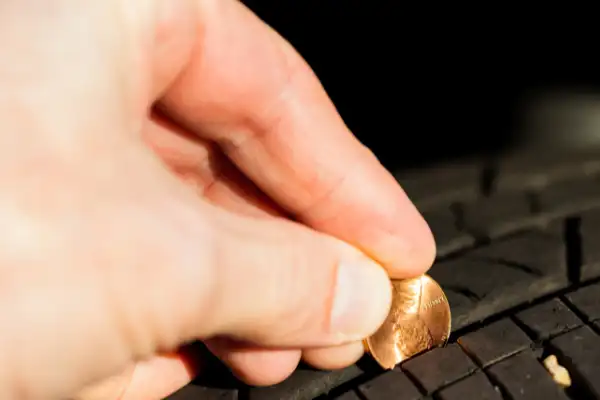
How to Carry Out the 20p Test
The coin check is useful for spotting a tyre that may need closer inspection, but an accurate tread-depth gauge provides a proper measurement.
Park Safely
Stop on firm, level ground, apply the parking brake and switch off the engine before examining the tyres.
Check Several Grooves
Place the 20p coin into the main grooves across the central section and repeat the test at different points around the tyre.
Investigate Any Doubt
If the outer band remains visible, or the tread looks uneven, measure it with a gauge or ask a tyre professional to inspect it.
Use the Tread Wear Indicators as a Visual Warning
Most tyres contain small raised bars moulded into the main tread grooves. These are known as tread wear indicators.
As the tyre wears down, the surrounding tread becomes closer to the height of these bars. When the tread is level with an indicator, the tyre is at or near the legal minimum and should be replaced.
The indicators are useful for a quick visual check, but they do not replace accurate measurements with a tread-depth gauge.
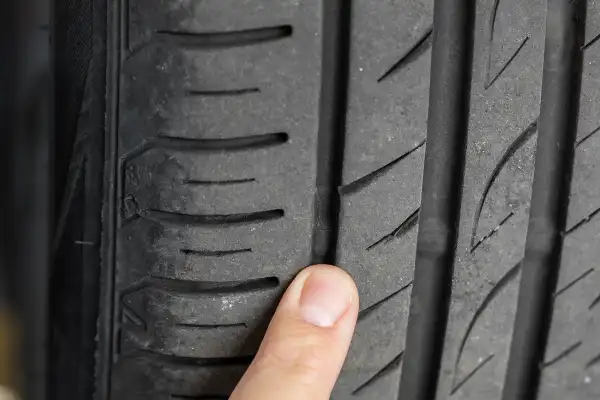
Check More Than One Part of the Tyre
A tyre can wear unevenly, so one tread indicator does not tell the whole story.
Find the Indicator Bars
Look inside the main tread grooves for small raised sections running across the groove.
Compare the Tread Height
If the surrounding tread is becoming level with the indicator bar, the tyre is approaching the minimum depth.
Inspect the Whole Circumference
Rotate your view around the tyre and check several indicators, because wear may be worse in one section than another.
Use a Tread-Depth Gauge for a Proper Reading
A tread-depth gauge gives a more accurate measurement than a visual check or the 20p test.
Place the gauge into one of the main tread grooves and press it down until the base sits flat against the tyre. Read the measurement and repeat the check across the central part of the tread.
Take readings at several points around the tyre. This helps reveal uneven wear that may not be obvious from a single measurement.
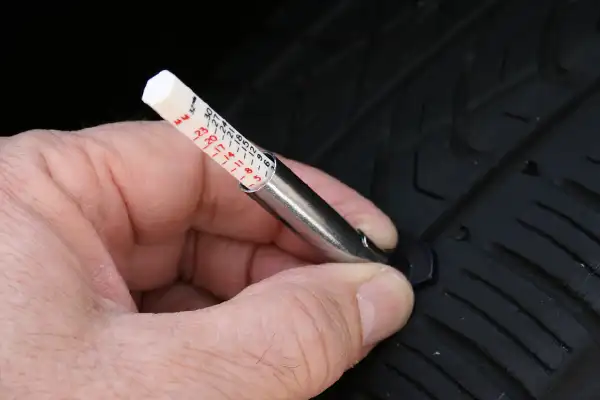
How to Get a Reliable Reading
Check several locations rather than relying on one part of the tyre.
Use the Main Grooves
Position the gauge in the principal tread grooves, where the legal depth is measured.
Measure Across the Tread
Take readings on the inner, middle and outer parts of the central tread area to check for uneven wear.
Repeat Around the Tyre
Measure at several points around the circumference because one area may be more worn than another.
Replace Tyres That Are Worn, Damaged or Unsafe
Tread depth is only one part of tyre safety. A tyre may still need replacing if it has cracks, cuts, bulges, exposed cords or other visible damage.
Check the sidewalls as well as the tread surface. Damage can develop after hitting potholes, kerbs or road debris, and it may not always cause an immediate loss of pressure.
If a tyre looks damaged, is losing pressure or causes vibration while driving, have it inspected by a qualified tyre professional.
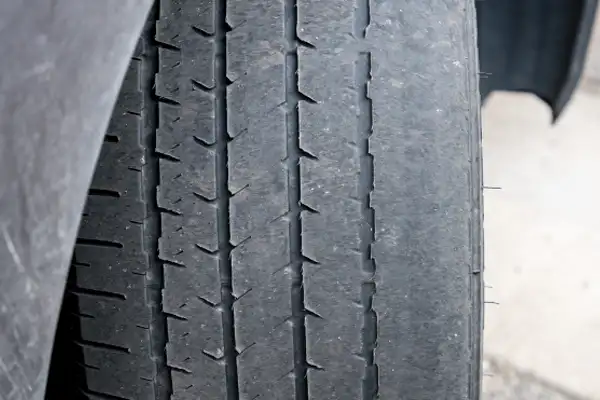
Do Not Ignore Visible Tyre Damage
Stop using the tyre and arrange an inspection when you notice anything that may affect its strength, grip or ability to hold pressure.
Cuts and Cracks
Deep cuts, splitting or cracking may weaken the tyre structure, particularly when damage reaches the sidewall.
Bulges and Distortion
A bulge may indicate internal damage. Do not continue driving on a tyre that has a visible swelling or distorted shape.
Repeated Pressure Loss
A tyre that repeatedly loses pressure may have a puncture, damaged valve, wheel problem or other fault that needs investigation.
Correct Tyre Pressure Helps the Tread Wear Evenly
Tyres that are overinflated or underinflated may wear unevenly and can affect grip, braking, fuel efficiency and steering response.
Check Pressures When Cold
Use the pressure figures recommended by the vehicle manufacturer and check the tyres before a long journey or when carrying extra weight.
Watch for Edge Wear
Excessive wear on both outer edges can be linked to low tyre pressure, while heavy wear in the centre may indicate overinflation.
Investigate One-Sided Wear
Wear concentrated on one side of the tyre may point to wheel alignment, suspension or steering problems.
Inspect All Four Tyres Properly
A quick glance is not enough. Turn the steering where safe so you can inspect more of the front tyres, and look carefully around each tyre rather than checking only the most visible section.
Measure tread depth in several places, inspect the sidewalls and confirm that the pressures are correct. Check the spare tyre as well if the vehicle carries one.
Regular checks make it easier to spot gradual wear before it develops into an unsafe or expensive problem.
Illegal Tyres Can Lead to Fines and Penalty Points
The driver is responsible for making sure the vehicle’s tyres are legal and safe before setting off.
A tyre may be illegal because its tread is below the minimum depth, or because it has a dangerous defect such as a serious cut, bulge or exposed cord.
Driving with an illegal tyre can lead to a fine of up to £2,500 and three penalty points for each defective tyre.
Check Your Tyres Before They Reach the Limit
The legal minimum is not a maintenance target. Regular checks help you identify wear and damage before the tyre becomes illegal or unsafe.
Check Monthly
Make tyre condition, tread depth and pressure part of your regular vehicle checks.
Check Before Long Journeys
Inspect the tyres before motorway journeys, holidays and trips where the vehicle will carry additional passengers or luggage.
Ask When Unsure
A tyre professional can measure the tread accurately and assess cuts, bulges, pressure loss or unusual wear.
Learn the Vehicle Checks Every Driver Should Know
Understanding tyre condition helps you keep the vehicle legal, roadworthy and safer in wet or difficult conditions.
Frequently Asked Questions
Quick answers about legal tread depth, tyre checks and common signs of wear or damage.
What is the legal tyre tread depth in the UK?
Cars, light vans and light trailers must have at least 1.6 mm of tread across the central three-quarters of the tyre and around its entire circumference.
How does the 20p tyre test work?
Insert a 20p coin into several main tread grooves. If the outer band of the coin remains visible, the tread may be too shallow and should be measured with a tread-depth gauge.
Where should I measure tyre tread depth?
Measure the primary tread grooves across the central three-quarters of the tyre. Take readings at several points around the complete circumference because wear may be uneven.
What are tyre tread wear indicators?
They are small raised bars moulded into the main tread grooves. When the surrounding tread becomes level with the bars, the tyre is at or close to its minimum tread depth.
Can a tyre be unsafe even if the tread is legal?
Yes. Cuts, cracks, bulges, exposed cords, repeated pressure loss or other damage may make a tyre unsafe even when its tread remains above the legal minimum.
What is the penalty for driving with an illegal tyre?
A driver may receive a fine of up to £2,500 and three penalty points for each illegal tyre.