Roundabout Lanes Guide
Learn how to choose the correct lane, use the 12 o’clock rule, follow spiral markings and approach UK roundabouts with a clear plan.
A simple way to choose your approach lane
Look at the roundabout sign and imagine a clock face over it. This gives you a useful starting point for lane choice, but signs and road markings always take priority.
Use this for left turns and exits before straight ahead.
Use the left lane for straight ahead unless markings or signs tell you otherwise.
Use this for right turns and full-circle or U-turn movements.
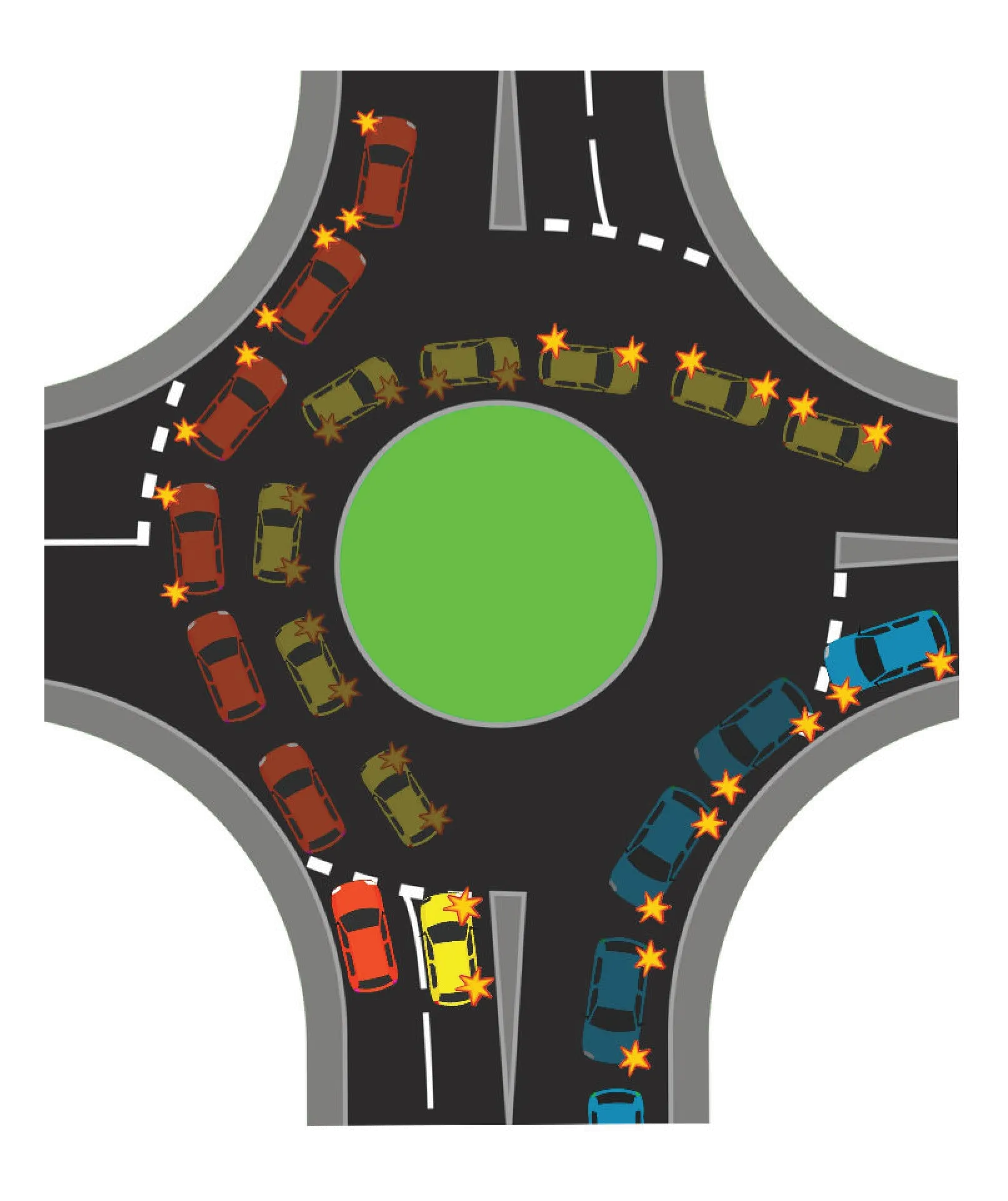
Two-lane and three-lane roundabouts
Plan early, read the signs and let the road markings confirm where you should be.
Two-lane roundabouts
- Left lane: usually for turning left or going straight ahead.
- Right lane: usually for turning right or going all the way around.
- Check signs and arrows because local layouts can override the general rule.
Three-lane and larger roundabouts
- The middle lane is often used for straight-ahead traffic.
- Lane arrows may assign specific exits to specific lanes.
- Choose your lane before reaching the give-way line.
Spiral roundabouts
Spiral lane markings guide you gradually from an inner lane towards the correct exit lane. Stay within the marked lane and allow the layout to move you outward rather than cutting across traffic.
Use MSM at roundabouts
Mirrors
Check early so you understand the speed and position of traffic behind you before slowing or changing lane.
Signal
Signal left for the first exit and right for exits past 12 o’clock. For straight ahead, usually wait until you pass the exit before yours, then signal left.
Manoeuvre
Position early, reduce speed, select the correct gear and look for a safe gap before joining.
Give way, observe and stay flexible
You should normally give way to traffic already on the roundabout, especially traffic approaching from your right, unless signs, traffic lights or road markings tell you otherwise.
Never assume another driver is in the correct lane or signalling properly. Keep observing and be ready to adjust.
Stay calm. Do not swerve or cut across traffic. It is safer to remain in your lane, take a different exit or continue around until you can leave safely.
Three errors to avoid
Choosing the wrong lane
Read signs and lane markings early so you can position before reaching the roundabout.
Signalling too early
Signal left after passing the exit before yours so other road users understand your intention clearly.
Cutting across lanes
Stay within the marked lane, especially on larger spiral roundabouts.
Download the roundabout lane guide
Keep the printable PDF in your learner folder and use it to review lane choices between lessons.
Official roundabout guidance
Roundabout Lane FAQs
Which lane should I use to go straight ahead?
In most cases, use the left lane unless road signs or lane markings indicate otherwise. On larger roundabouts, a middle lane may be marked for straight-ahead traffic.
Do I need to signal when entering a roundabout?
Signal left for the first exit and right for an exit past 12 o’clock. For straight ahead, you usually do not signal on approach unless signs or markings require it.
When should I signal to leave the roundabout?
Signal left just after passing the exit before the one you intend to take.
What should I do if I realise I am in the wrong lane?
Stay calm and avoid sudden lane changes. Remain in your lane, take a different exit if necessary or continue around until you can leave safely.
Who has priority at a UK roundabout?
You should normally give way to traffic already on the roundabout, especially traffic approaching from your right, unless signs, lights or markings tell you otherwise.
What are spiral lane markings?
Spiral markings guide vehicles gradually from an inner lane towards the correct exit lane. Stay within the marked lane and let the layout move you outward.
Build confidence on every type of roundabout
Practise lane choice, observations and signalling with your instructor until the routine feels calm and predictable.