Parallel Parking Made Simple
A clear six-step method to help you reverse into a space safely, accurately and with confidence during your driving test.
Safe, controlled and reasonably accurate
You will normally be asked to pull up before one parked vehicle, move alongside it and reverse into the space behind. The examiner is looking for good control, effective observations and a safe final position.
The manoeuvre does not need to be perfect. You may make an adjustment if needed, provided you remain in control and continue observing.
- Move very slowly.
- Observe all around repeatedly.
- Pause if another road user approaches.
- Make a safe correction if required.
How to parallel park
Use the same reference points each time until the sequence becomes familiar.
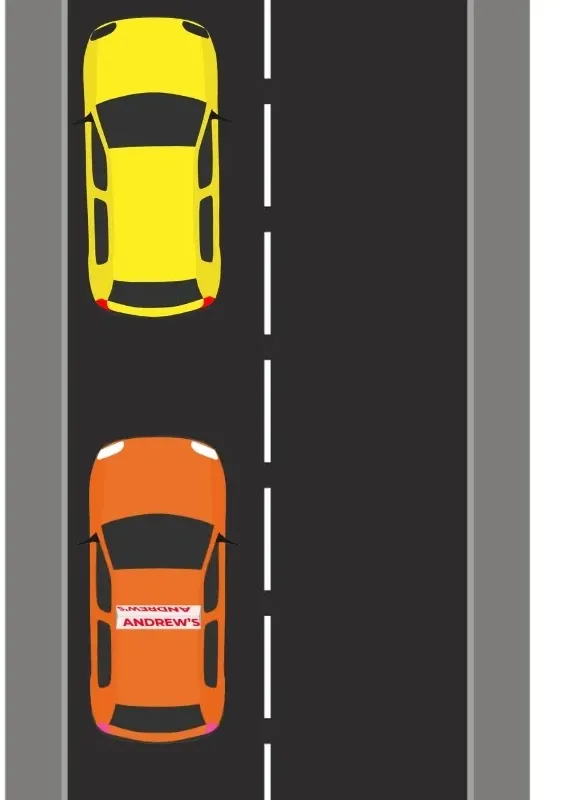
Pull up before the target car
Stop on the left a little way before the parked vehicle. Leave enough room to move forward and position your car alongside it.
Before moving off, check the mirrors and blind spot carefully.
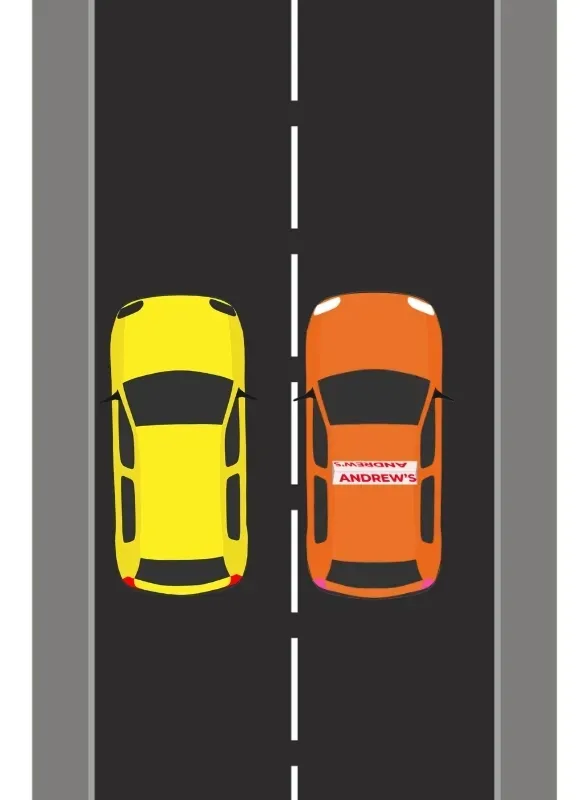
Pull up alongside the parked car
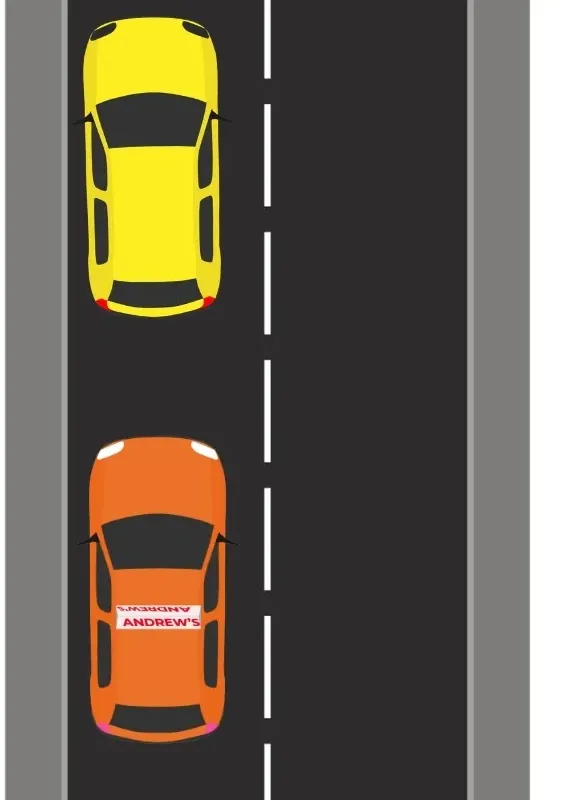
Stop straight and parallel beside the target car, leaving roughly a one-metre gap.
Try to line up your rear wheels approximately level with the rear wheels of the parked vehicle.
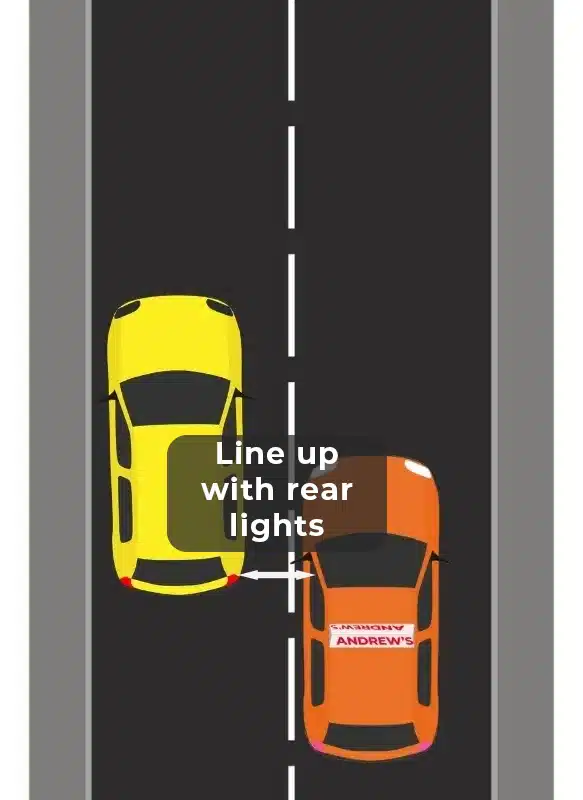
Select reverse and reach the turning point
Complete full observations all around the car. When it is safe, begin reversing slowly.
Continue until the rear lights of the target car line up with your passenger-side window.
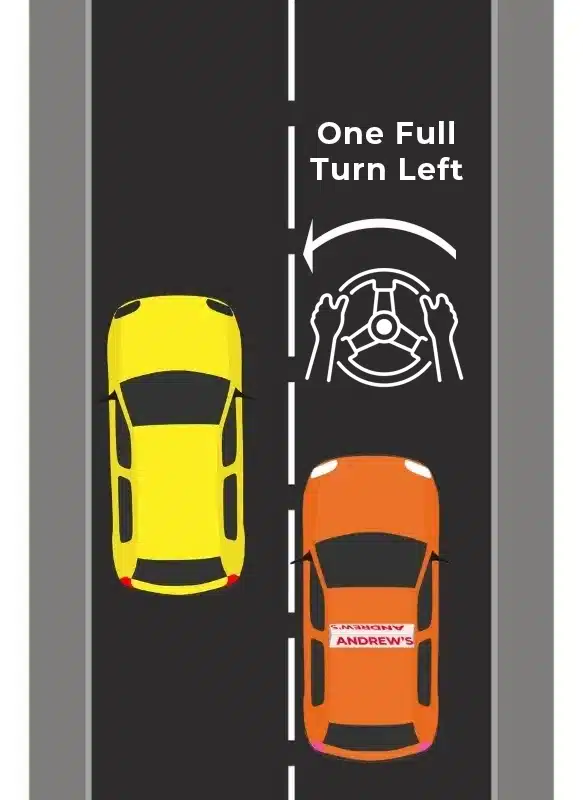
Turn one full turn to the left
Turn the steering wheel one complete turn to the left and continue reversing slowly.
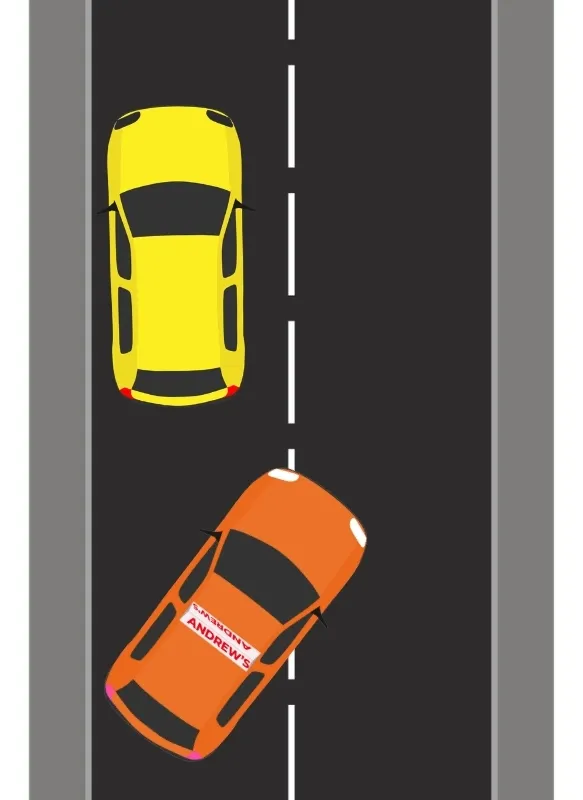
Stop the steering movement when your car reaches roughly a 45-degree angle to the kerb.
The car is about halfway between straight and fully parked. The rear moves towards the kerb while the front still points into the road.
Straighten the wheels
Turn the wheel one full turn to the right to straighten the front wheels.
Continue reversing until the rear wheel is about eight inches from the kerb.
Full lock right and finish
Check that the front of your car will clear the parked vehicle, then turn the steering wheel fully to the right.
Keep reversing until your car is parallel with the kerb and reasonably close to it. Aim to finish within about 30cm, roughly the width of a roadside drain.
Keep checking while the car is moving
Look through the rear window, use your mirrors and check the blind spots throughout. If a pedestrian, cyclist or vehicle approaches closely, pause and assess before continuing.
Four errors to avoid
Starting too close
Leave roughly one metre between the cars so you have enough room to create the correct angle.
Moving too quickly
Use slow clutch control so you have time to observe and adjust the steering accurately.
Missing observations
Keep checking all around instead of looking only at the kerb or parked vehicle.
Forcing a bad finish
Make a calm adjustment rather than mounting the kerb or cutting too close to the target car.
Parallel Parking FAQs
What does reasonably close to the kerb mean?
Aim to finish within about 30cm, roughly 12 inches, of the kerb. The examiner wants safe positioning and good control rather than absolute perfection.
Will I have to park between two cars on my driving test?
No. You will usually reverse behind one parked vehicle and be given enough room to complete the manoeuvre safely, typically at least two car lengths.
Will I fail if I touch the kerb?
A light touch may result in a driving fault, while mounting the kerb or striking it heavily could be judged more seriously.
Can I adjust my position during the manoeuvre?
Yes. You may make an adjustment as long as you remain in control and continue checking your surroundings.
Will I be asked to parallel park on the right?
No. The parallel parking exercise is completed on the left. Pulling up on the right and reversing is a separate driving-test manoeuvre.
Do I need to signal when parallel parking?
Signal when it would benefit another road user. Always check the mirrors and blind spot before moving.
What are examiners looking for?
They are looking for effective observations, good vehicle control and reasonable accuracy. The manoeuvre should be safe and controlled rather than flawless.
Make the reference points feel familiar
Practise the method with your instructor until the steering sequence, observations and slow-speed control become calm and repeatable.