How to Reverse Bay Park
A simple four-step method to help you reverse into a parking bay safely, accurately and with confidence during your driving test.
Good observations, control and positioning
You may be asked to reverse into a marked parking bay during your practical driving test. The examiner is looking for effective all-round observations, slow controlled movement and a safe final position.
The car should finish fully within the white lines and reasonably central. A safe adjustment is allowed if needed.
- Keep the car moving very slowly.
- Check mirrors and blind spots repeatedly.
- Pause if another road user approaches.
- Correct the position safely if necessary.
Reverse bay parking in four stages
Use the same reference point and steering sequence until the manoeuvre becomes familiar.
Get into position
Pull up slightly towards the right-hand side of the lane, as far as is safe. This creates more room for the front of the car to swing.
Line the rear of your car up with the dotted line of the bay you want to reverse into. Before moving, check all around, including both mirrors and blind spots.
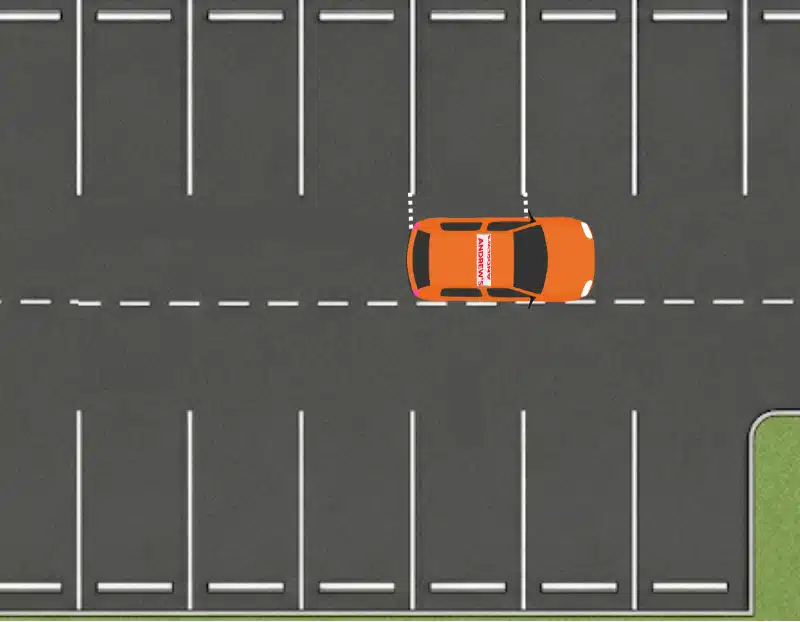
Apply full lock left
Once it is safe, begin reversing slowly. As the car starts moving, turn the steering wheel fully to the left.
Continue at walking pace while the rear of the car moves into the bay.
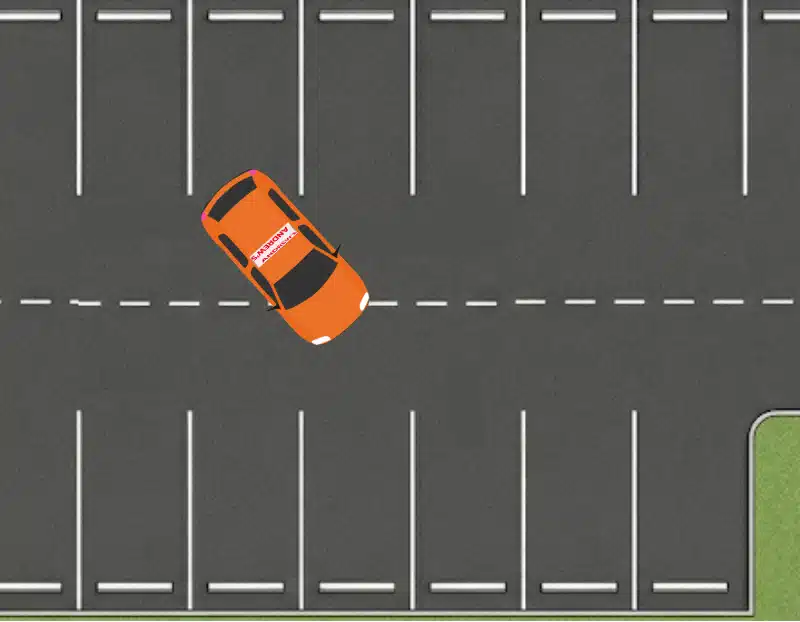
Watch both bay lines
Use both door mirrors to check that the car is entering the bay evenly.
Keep reversing until the car is almost straight within the space. Pause and make a small adjustment if one side is becoming too close to a line.
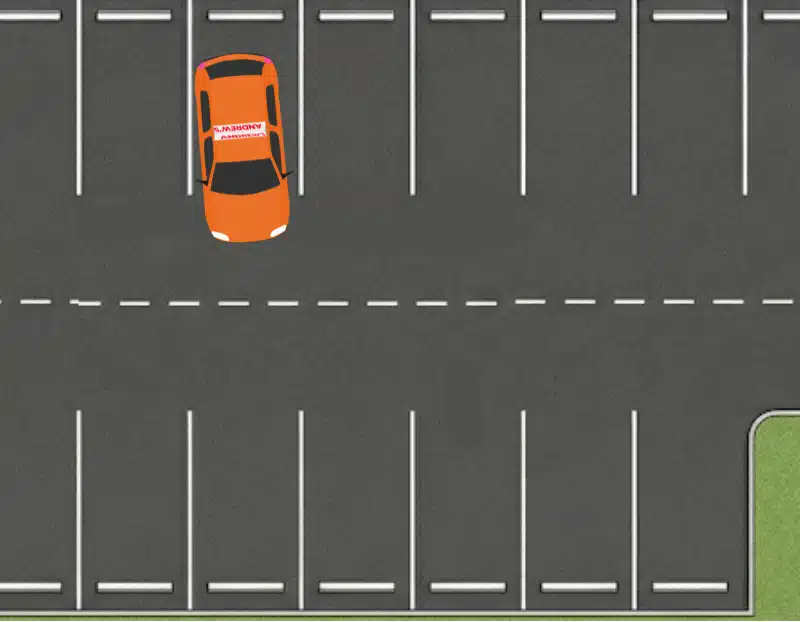
Straighten and finish
Straighten the steering wheel once the car is lined up with the bay.
Continue reversing slowly until the whole vehicle is inside the space and reasonably central between the white lines.
If the car is crooked or too close to one side, it is fine to move forward and correct the position safely.
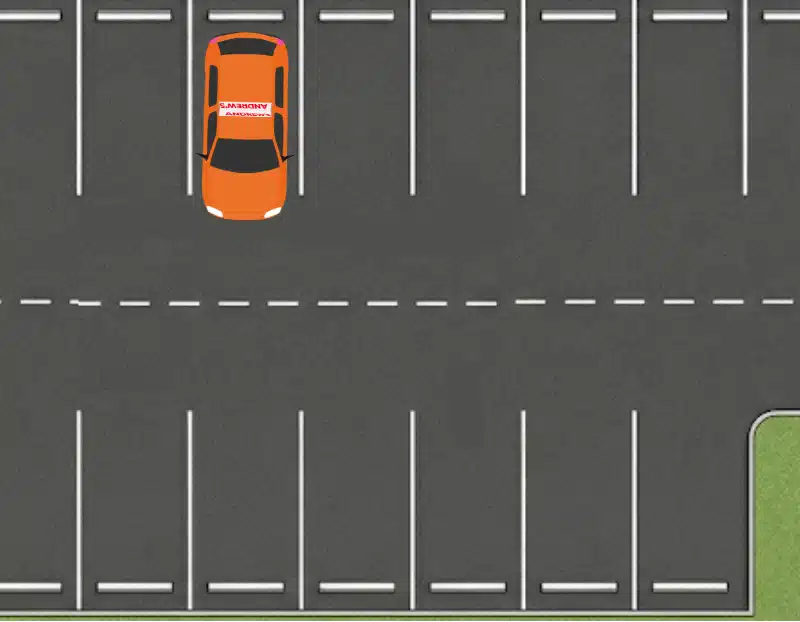
Keep checking while reversing
Use both mirrors, look through the rear window and check the blind spots throughout the manoeuvre. If a pedestrian, cyclist or vehicle enters your path, stop and reassess before continuing.
Four errors to avoid
Starting too far left
Move slightly towards the right side of the lane to give the front of the car room to swing.
Reversing too quickly
Slow movement gives you more time to observe, steer and correct the position.
Looking only in the mirrors
Continue checking all around the car, not just the bay lines.
Refusing to adjust
A controlled correction is safer than forcing the car into a poor final position.
Bay Parking FAQs
How close do I need to be to the bay lines?
Aim to finish neatly between the white lines with the whole car fully inside the bay. Reasonably central is normally acceptable.
Can I adjust my position if I go in crooked?
Yes. You may pull forward and correct the position as long as you do it safely and continue making effective observations.
Will I fail if I touch a bay line?
Touching a line is not automatically a fail. Finishing over the line or outside the bay may result in a fault and could be marked more seriously depending on the position.
Will I have to reverse into a bay on my driving test?
The examiner may ask you to reverse into a bay, or drive forward into one and reverse out. Reverse bay parking is one of the manoeuvres that can be selected.
Do I need to signal when bay parking?
Signal only when it would help another road user. In most car parks, effective observations are more important than signalling.
What are examiners looking for during a bay park?
They are looking for good all-round observations, slow controlled movement, accurate positioning and safe adjustments when needed.
Make the reference point feel familiar
Practise with your instructor until the steering sequence, observations and slow-speed control feel calm and repeatable.