How to Use Fog Lights
Learn when front and rear fog lights should be used, how to recognise their dashboard symbols and why they must be switched off when visibility improves.
Fog Lights Help Other Road Users See You
Fog lights are designed for conditions where visibility is severely reduced. They are brighter than normal rear lights and can make your vehicle easier to see through thick fog, heavy spray or falling snow.
They should not be used simply because it is dark, raining or slightly misty. In normal conditions, fog lights can dazzle other drivers and make brake lights harder to notice.
Once visibility improves, switch the fog lights off and continue using the normal dipped headlights where required.
Front and Rear Fog Lights Have Different Jobs
Both types improve visibility in poor conditions, but they are fitted in different places and serve different purposes.
Front Fog Lights
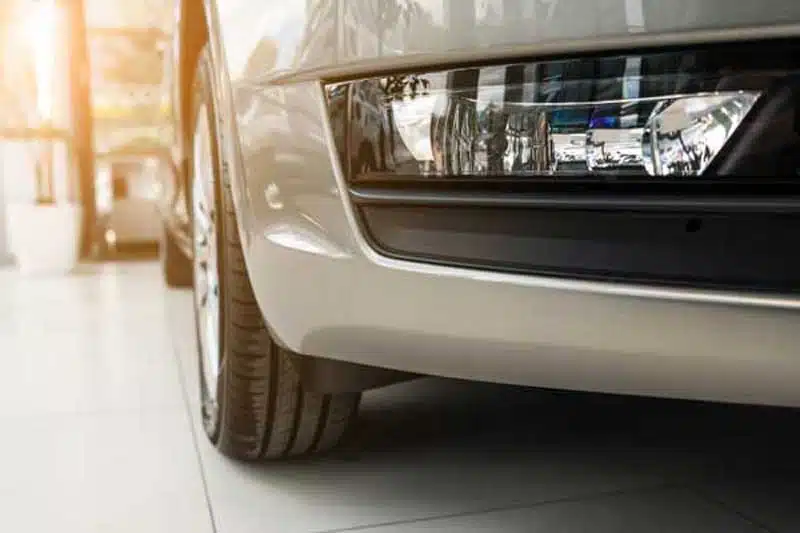
Front fog lights are mounted low on the vehicle and help illuminate the road immediately ahead in thick fog or heavy spray.
Rear Fog Lights
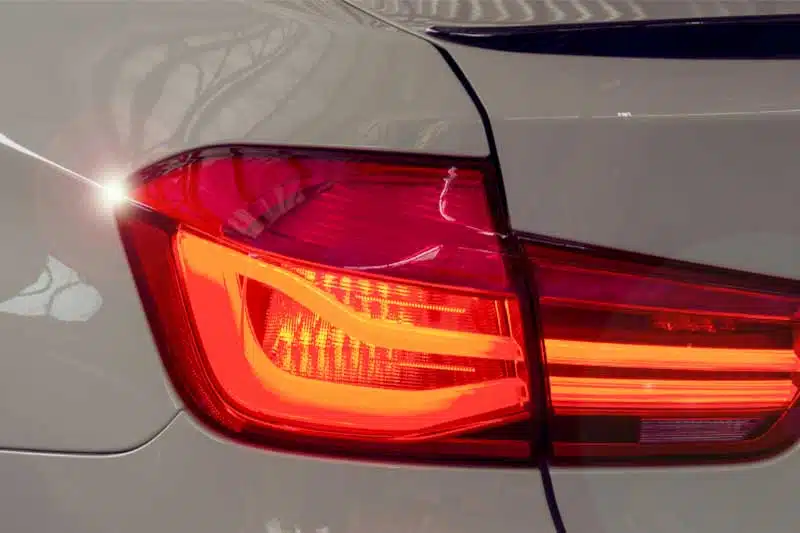
Rear fog lights are much brighter than normal rear lights and help drivers behind see your vehicle in severely reduced visibility.
Dashboard Warnings
A warning symbol appears when the fog lights are switched on. Use it as a reminder to turn them off once conditions improve.
Designed to Make Your Vehicle Easier to See From Behind
Rear fog lights produce a much brighter red light than normal rear lights. They are intended to help drivers behind see your vehicle when visibility is seriously reduced.
Because they are so bright, they can dazzle other road users and make brake lights harder to distinguish when used unnecessarily.
Check the dashboard warning symbol and switch the rear fog light off as soon as visibility improves.
Mounted Low to Help in Poor Visibility
Front fog lights are usually positioned low in the front bumper. Their beam is designed to illuminate the road close to the vehicle during fog, spray or falling snow.
They are not a substitute for dipped headlights and should not be used simply to make the vehicle look brighter in normal conditions.
Some vehicles have both front and rear fog lights, while others may only be fitted with a rear fog light.
Use Them Alongside the Correct Main Lights
In seriously reduced visibility, use dipped headlights and then add the fog lights where necessary.
Avoid using full beam in fog because the light can reflect back from the water droplets and make it harder to see.
Keep your speed low enough to stop safely within the distance you can see to be clear.

Fog-Light Switches Differ Between Vehicles
The controls may be built into the main light switch, fitted to an indicator stalk or operated by a separate button. Check the vehicle handbook when you are unfamiliar with the layout.
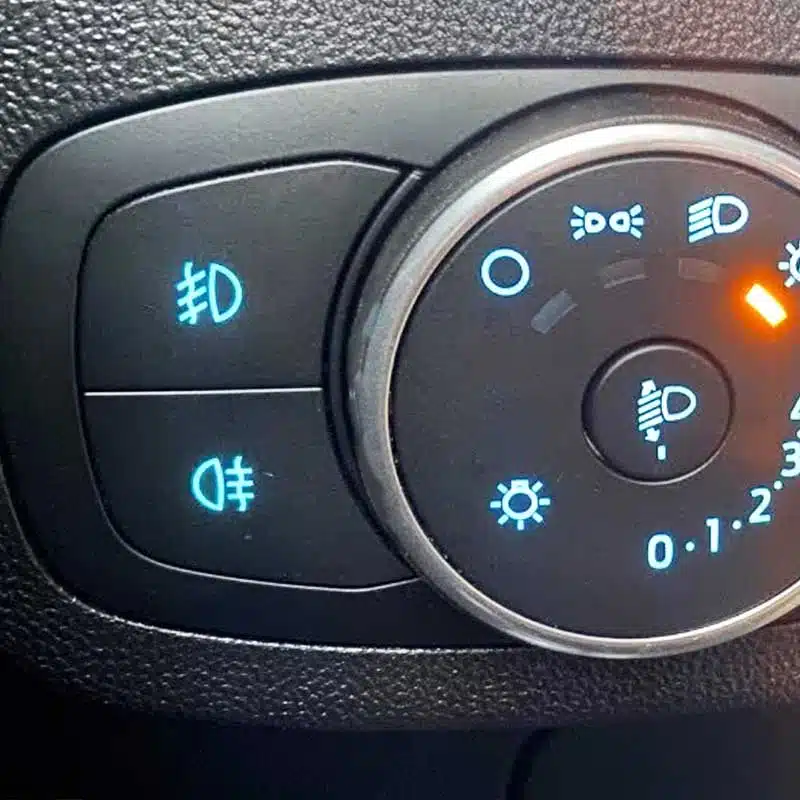
Ford Focus
On some Ford Focus models, the fog lights are controlled through the main rotary light switch. The exact operation can vary by model and specification.
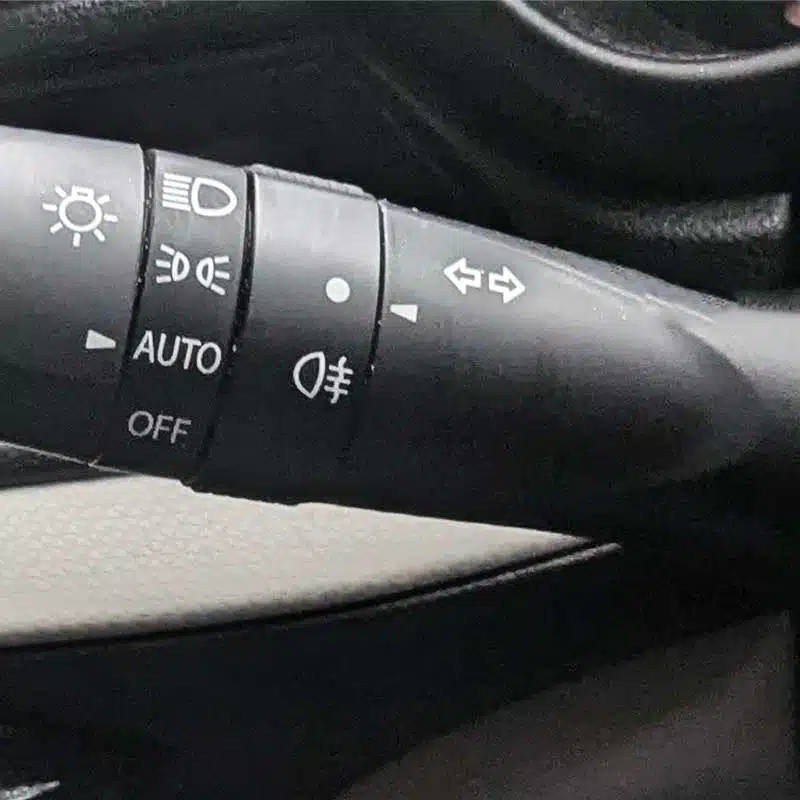
Suzuki Swift
Some Suzuki Swift models use a control on the lighting stalk. Look for the front or rear fog-light symbol and confirm that the dashboard warning light appears.
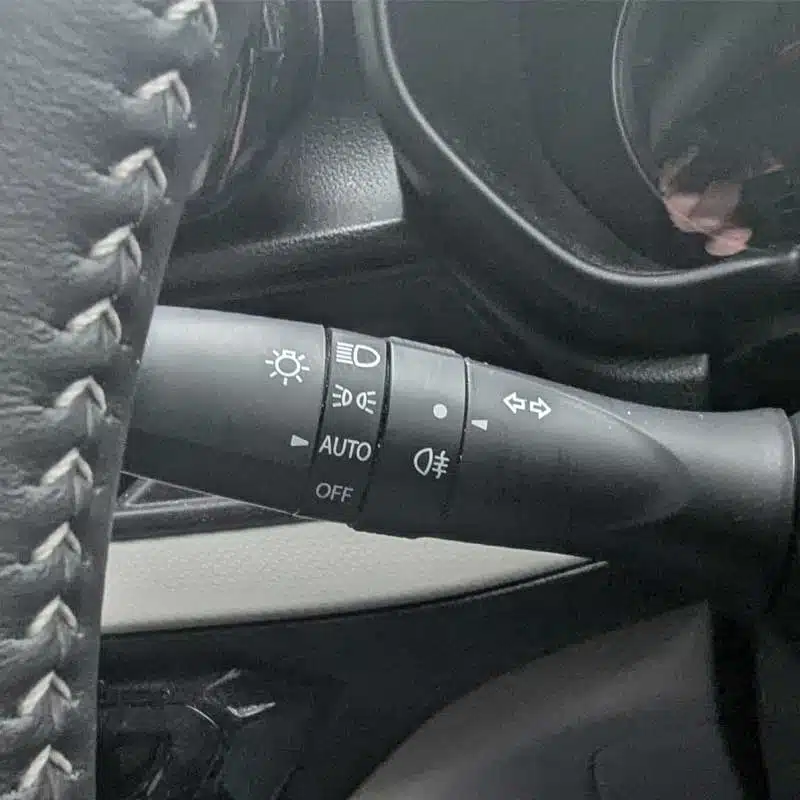
Mazda
Mazda models may also place the fog-light control on the lighting stalk. Always check which position operates the front lights, rear light or both.
Use the Dashboard Warning Symbol
A dashboard symbol should illuminate when the fog lights are active. This confirms the control has been operated and also reminds you that the lights still need switching off when visibility improves.
The front and rear fog-light symbols face in opposite directions, and the rear symbol is commonly shown in amber.
Learn the controls before driving into poor visibility. Searching for an unfamiliar switch while moving takes attention away from the road.
Switch Fog Lights Off When Visibility Improves
Fog lights are much brighter than normal vehicle lights. Leaving them on unnecessarily can dazzle other road users and make your brake lights harder to notice.
Do Not Use Them in Clear Weather
Fog lights are not intended for normal night driving or simply making the vehicle more noticeable.
Rain Alone Is Not Enough
Normal rain does not automatically justify using fog lights. Use them only when visibility has become seriously reduced.
Check After Conditions Change
Visibility can improve quickly. Keep checking the road ahead and use the dashboard warning symbol as a reminder.
Fog Lights Do Not Make It Safe to Drive Normally
Even with the correct lights switched on, thick fog greatly reduces the distance you can see. Slow down early and make sure you can stop safely within the distance that appears clear.
Increase the gap from the vehicle ahead and avoid following its rear lights too closely. Doing so can reduce your view of the road and leave too little space if traffic suddenly slows.
Use the demister, ventilation and wipers to keep the glass clear. Listen for traffic at junctions and take extra care around pedestrians, cyclists and vehicles without powerful lighting.
Fog-Light Errors to Avoid
Most mistakes come from switching the lights on too early, leaving them on too long or not knowing which control operates each light.
Using Full Beam
Full beam can reflect back from fog and make the road harder to see. Use dipped headlights instead.
Forgetting the Rear Light
Rear fog lights can remain dazzling after the fog clears. Check the dashboard warning and switch them off promptly.
Searching for the Switch
Learn the controls while parked. Looking for an unfamiliar switch while moving distracts you from the road.
A Simple Fog-Light Checklist
Use the lights only when the conditions require them, and keep checking whether visibility has improved.
Check Visibility
Use fog lights only when visibility is seriously reduced, generally when you cannot see beyond about 100 metres.
Use the Correct Lights
Switch on dipped headlights and use the front or rear fog lights when they are needed. Avoid full beam in fog.
Switch Them Off
Turn fog lights off promptly once visibility improves so they do not dazzle or confuse other road users.
Learn the Controls Before You Need Them
Understanding the fog-light switches and dashboard symbols helps you respond calmly when visibility suddenly becomes poor.
Frequently Asked Questions
Quick answers about when to use fog lights, dashboard symbols and driving safely in reduced visibility.
When should I use fog lights?
Fog lights should be used only when visibility is seriously reduced, generally when you cannot see beyond about 100 metres.
Should I use fog lights in normal rain?
No. Normal rain or darkness alone does not justify using fog lights. They should only be used when visibility is seriously reduced.
Why must rear fog lights be switched off?
Rear fog lights are very bright. In clearer conditions they can dazzle drivers behind and make brake lights harder to distinguish.
Should I use full beam in fog?
No. Full beam can reflect back from the fog and reduce visibility. Use dipped headlights instead.
How do I know the fog lights are switched on?
A dashboard warning symbol should illuminate. Front and rear fog-light symbols face in opposite directions, and the rear symbol is commonly amber.
Do all cars have front fog lights?
No. Some vehicles have both front and rear fog lights, while others are fitted only with a rear fog light.