Extended Driving Test
Understand who needs an extended driving test, how to regain your licence and how professional refresher training can help you return to driving safely and confidently.
Who needs an extended driving test?
You only need to take an extended driving test when a court has disqualified you from driving and specifically ordered you to pass an extended test before regaining your full licence.
The exact requirements will be shown in your court order and in correspondence from the DVLA. Some disqualified drivers are ordered to retake a standard test, while others must pass the longer extended version.
Returning to driving after a ban can feel daunting. Our instructors provide calm, focused refresher training to help identify unsafe habits, rebuild confidence and prepare you for the standard expected during the longer assessment.
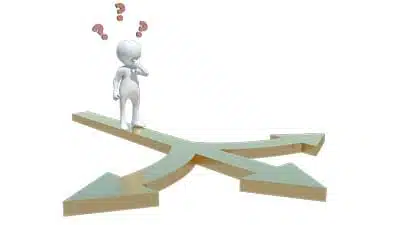
Start by identifying what needs to change
Drivers returning after disqualification often have years of road experience, but may also have habits that do not meet the current driving-test standard.
A professional assessment allows your instructor to examine observation, speed choice, anticipation, positioning, planning and control before recommending a training plan.
The aim is not merely to rehearse a test route. It is to demonstrate safe, responsible driving consistently over a longer drive.
Extended driving-test quick facts
The assessment is considerably longer than the standard car driving test.
The official fee depends on whether the test is taken on a weekday or at a premium time.
You must pass the required theory test before taking the practical retest.
Expect different roads, traffic situations, independent driving and at least one manoeuvre.
You may pass with up to 15 driving faults and no serious or dangerous faults.
You only take the extended test when the court has specifically ordered it.
Your roadmap to regaining your licence
Follow the requirements in your court order and DVLA correspondence. Your individual process may differ depending on the disqualification.
Check what the court ordered
Confirm whether you must pass a standard retest or the extended driving test before regaining your full driving entitlement.
Reapply for a provisional licence
DVLA normally sends a D27 renewal form before the disqualification ends. This is usually sent around 56 days beforehand, or earlier for certain high-risk offenders.
Read the official DVLA reapplication guidance →Pass the required theory test
You must pass the required theory and hazard-perception test before booking the practical retest.
Book through the official theory-test service →Complete a professional driving assessment
An instructor can identify current strengths, unsafe habits and the amount of refresher training likely to be needed.
Andrew’s Driving School offers extended-test preparation in selected parts of North Wales and Telford, subject to instructor availability.
Complete focused refresher training
Practise observation, planning, speed choice, junctions, roundabouts, dual carriageways, independent driving and safe manoeuvres.
Book the correct practical test
Make sure the booking is for an extended driving test for a disqualified driver rather than a standard learner test.
Use the official DVSA booking service →Pass and regain your driving entitlement
You can drive once the disqualification has ended, you have passed every test ordered by the court and you hold valid driving entitlement.
What to expect from the extended driving test
The extended test assesses the same fundamental driving skills as a standard practical test, but over a longer period and across a wider range of situations.
The examiner needs to see safe, consistent driving rather than a brief spell of good performance. Concentration, planning and judgement must be maintained throughout the assessment.
Compared with around 40 minutes for a standard car driving test.
What happens during the test?
Different road types
Town roads, rural routes, faster roads and dual carriageways may be included where available.
Independent driving
You may follow a sat nav, road signs or a combination of examiner directions.
A reversing manoeuvre
You may be asked to parallel park, bay park or pull up on the right and reverse.
Emergency stop
The examiner may ask you to demonstrate a controlled emergency stop.
Observation and planning
Effective mirrors, blind-spot checks and early hazard awareness are assessed throughout.
Judgement and responsibility
Your decisions must demonstrate safe speed, spacing, positioning and consideration for other road users.
Is an extended test marked more strictly?
The recognised fault categories remain driving, serious and dangerous faults. You need no serious or dangerous faults and no more than 15 driving faults to pass.
The extended test can feel more demanding because it lasts longer. The examiner has more time to assess whether your observation, planning, judgement and control remain consistent.
Your goal is to demonstrate that you are ready to return to unsupervised driving safely and responsibly.
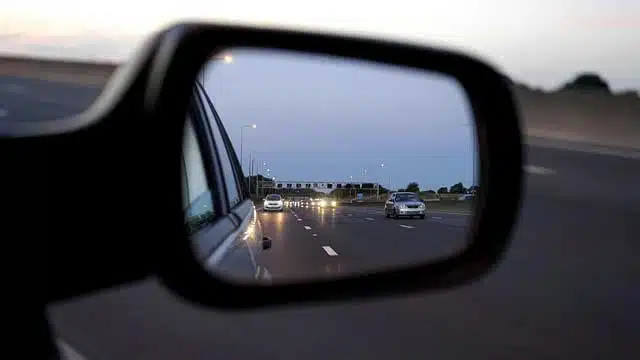
Observation must become a dependable habit
Mirror checks should happen before changing speed, direction or road position, and blind-spot checks must be used whenever the situation requires them.
A longer assessment gives the examiner more opportunity to see whether these routines are applied naturally rather than only when approaching a familiar junction or manoeuvre.
Extended driving-test costs
Instructor and vehicle costs are separate
The official fee covers the test only. Lessons, a pre-test warm-up and use of an instructor’s vehicle are charged separately and must be agreed with the instructor.
Can you use your own car?
You can use your own car if it meets all current DVSA test-vehicle rules and is insured for the practical driving test.
The examiner can refuse to conduct the test when the vehicle does not meet the required standard.
- The car must be roadworthy and appropriately insured.
- It must have a valid MOT when one is required.
- No safety-related dashboard warning lights should be showing.
- Legal L plates or Welsh D plates must be displayed.
- An extra interior rear-view mirror must be fitted.
- The examiner must have a suitable seatbelt and head restraint.
High-risk offender medical requirements
“High-risk offender” is a specific DVLA classification connected with certain drink-driving circumstances. It is not automatically triggered simply because someone receives another driving ban within ten years.
A high-risk offender must normally satisfy DVLA medical requirements before a new licence is issued. The process can include a medical examination and blood tests.
Follow the instructions sent by DVLA and do not assume that passing the extended test alone completes the relicensing process.
Read the official high-risk offender guidance →Can a driving ban be shortened?
A court may offer an approved drink-drive rehabilitation course when someone is convicted of a drink-driving offence and banned for at least 12 months.
Completing the course within the deadline set by the court normally reduces the ban by one quarter. A 12-month ban could therefore be reduced to nine months.
The course can cost up to £250 and must be offered by the court. It is not available as a general reduction for every kind of driving disqualification.
What extended-test training should cover
Training should be based on your actual driving rather than a fixed package that treats every returning driver in the same way.
Observation
Mirrors, blind spots, junction assessment and awareness of vulnerable road users.
Speed and progress
Choosing an appropriate speed without hesitating unnecessarily or rushing decisions.
Planning
Reading signs, road markings and traffic conditions early enough to respond smoothly.
Positioning
Safe road position at junctions, bends, roundabouts and when passing parked vehicles.
Faster roads
Joining, leaving and driving safely on dual carriageways where suitable routes are available.
Independent driving
Following sat-nav or signs while continuing to observe, plan and make safe decisions.
Recommended extended-test preparation aids
These products may support private practice but do not replace professional driving instruction.
Blind-spot mirrors
Additional mirrors may help with awareness of kerbs and vehicle position during private parking practice.
View on AmazonLearner-driver interior mirror
An additional interior mirror can help a supervising driver monitor traffic behind during private practice.
View on AmazonOfficial DVSA theory-test book
Refresh road knowledge, traffic signs, rules and hazard awareness before retaking the theory test.
View on AmazonThese are affiliate links. Andrew’s Driving School may receive a benefit if you purchase through them, at no additional cost to you.
Extended driving-test FAQs
What is an extended driving test?
It is a longer practical driving test taken by a disqualified driver when a court has ordered that an extended test must be passed before full driving entitlement can be restored.
How long does the extended driving test last?
It normally lasts around 65 minutes, compared with approximately 40 minutes for a standard practical car driving test.
How much does an extended driving test cost?
The official DVSA fee is £124 for a weekday test and £150 for an evening, weekend or bank-holiday appointment.
Lessons, warm-up time and use of an instructor’s car are additional costs.
Is the extended test harder than a normal driving test?
It is more demanding because it lasts longer and gives the examiner more time to assess your driving across different conditions.
The recognised fault categories and maximum of 15 driving faults remain the same.
What happens during the extended driving test?
It can include normal road driving, independent driving, different road and traffic conditions, one reversing manoeuvre and possibly an emergency stop.
How many faults are allowed?
You can pass with 15 or fewer driving faults, provided you make no serious or dangerous faults.
Can I take the extended test in my own car?
Yes, provided the car meets all current DVSA test-vehicle rules, is roadworthy, correctly insured and fitted with an additional interior mirror for the examiner.
Do I need driving lessons before an extended test?
There is no fixed legal number of lessons, but professional assessment and refresher training are strongly recommended.
Even experienced drivers may need help correcting habits that do not meet the current driving-test standard.
Can I drive immediately after passing?
You can drive when your disqualification has ended, you have passed all tests ordered by the court and you hold valid driving entitlement.
High-risk offenders may also need to complete the DVLA medical process before a licence is issued.
Return to driving with safe, focused refresher training
Speak to Andrew’s Driving School about an initial assessment and extended-test preparation in selected areas of North Wales and Telford.