Breakdown Cover Explained
Breakdown cover gives you access to roadside help when your vehicle develops a mechanical or electrical fault. This guide explains how it works, the different levels available and what to check before choosing a policy.
How Does Breakdown Cover Work?
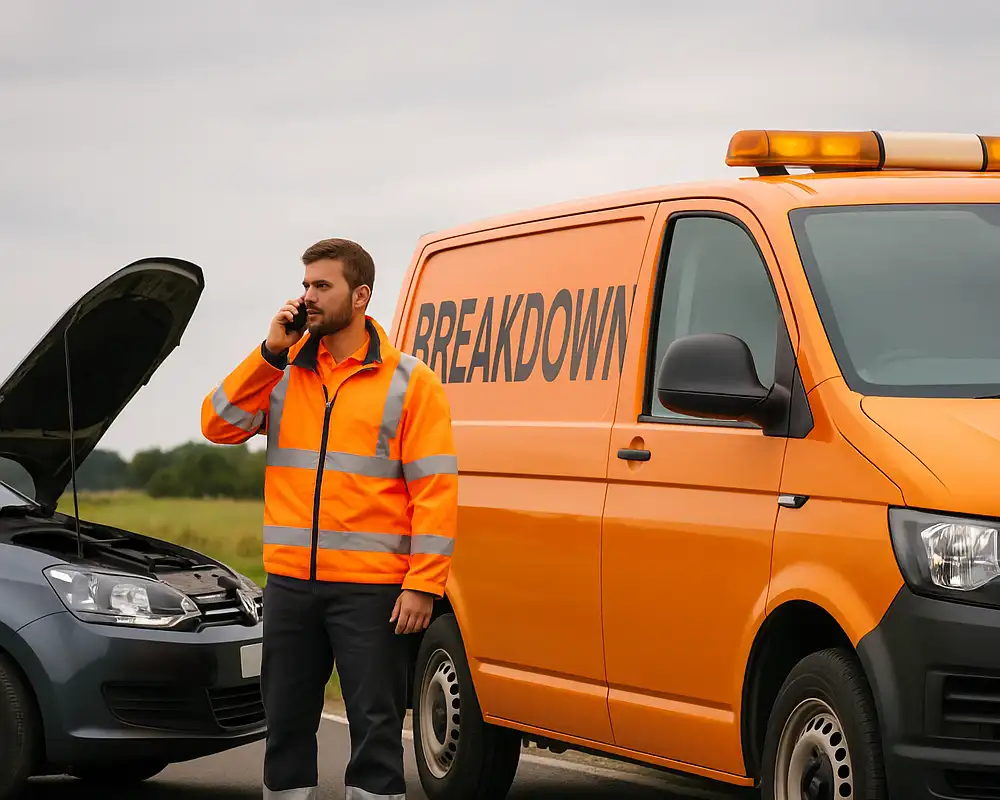
When your vehicle develops a mechanical or electrical fault, you contact the breakdown provider using its app, website or emergency telephone number.
The provider will ask where you are, what has happened and whether anyone is in immediate danger. A patrol may then be sent to inspect the vehicle and attempt a roadside repair.
When the car cannot be repaired safely at the roadside, the level of cover you purchased determines where the vehicle and its passengers can be taken.
What Should You Do When Your Car Breaks Down?
Your first priority is reducing the risk to yourself, passengers and other road users. The safest action depends on the road, traffic, weather and whether the vehicle can still be moved.
What Types of Breakdown Cover Are Available?
Breakdown policies use different names, but the main levels of help are usually similar. Check exactly what each provider includes before you buy.
Roadside Assistance
A patrol attends when the vehicle breaks down away from home and tries to repair it at the roadside.
When a repair is not possible, basic cover may include a short tow to a nearby garage, subject to the policy terms.
Home Start
Home-start cover can provide assistance when the vehicle fails at home or within the provider’s normal roadside-assistance exclusion distance.
This can be useful for problems such as a flat battery or a vehicle that will not start before a journey.
National Recovery
When the vehicle cannot be repaired, national recovery may transport the car and passengers to a chosen destination within the covered area.
Check passenger limits, destination rules and whether trailers or caravans are included.
Onward Travel
Onward-travel cover may help with a replacement vehicle, public transport or overnight accommodation when the car cannot be repaired promptly.
Limits, eligibility and reimbursement rules vary between providers.
Which Level of Breakdown Cover Do You Need?
A driver who mainly makes short local trips may have different needs from someone who regularly travels long distances for work, family visits or holidays.
Think about where you drive, who travels with you and what would happen if the car could not be repaired the same day.
Personal Cover or Vehicle Cover?
Breakdown policies can protect a particular vehicle or a particular person. The best option depends on how many cars you drive and who uses the vehicle.
Vehicle Breakdown Cover
Vehicle cover applies to the specified car, van or motorcycle, regardless of which eligible person is driving it at the time.
- Useful when several people share one vehicle.
- The registration must usually be listed on the policy.
- Other vehicles you drive may not be included.
- Vehicle age or size restrictions may apply.
Personal Breakdown Cover
Personal cover follows the named member when they are driving or travelling in an eligible vehicle covered by the policy terms.
- Useful when you regularly drive several vehicles.
- You may be covered as a driver or passenger.
- Vehicle restrictions can still apply.
- Additional household members may cost extra.
What Might Breakdown Cover Exclude?
Breakdown cover is not a maintenance policy. Providers may refuse assistance, charge additional fees or limit recovery when the problem falls outside the policy conditions.
Exclusions vary, so read the full terms rather than relying only on the headline cover description.
What May Cost Extra?
Breakdown cover normally pays for the attendance and recovery described by the policy. Replacement parts, garage labour and specialist services may still need to be paid for separately.
What Should You Do if You Break Down on a Motorway?
When possible, leave the motorway at the next junction or service area. When that is not possible, move left into an emergency area or onto the hard shoulder where one is available.
Stop as far to the left as possible, switch on the hazard warning lights and follow the current Highway Code guidance for your location and circumstances.
Keep your seat belt fastened, switch on the hazard warning lights and call 999 immediately. Do not leave the vehicle unless you can reach a safe location away from traffic.
What Should You Check Before Buying Breakdown Cover?
The cheapest policy may provide only limited roadside help. Compare the recovery distance, exclusions and additional charges before choosing.
Distance from home
Basic roadside cover may not apply when the vehicle breaks down close to the registered home address.
Recovery destination
Check whether the vehicle can be taken only to a nearby garage or to a destination of your choice.
Passenger limits
Make sure the policy can recover the number of people who normally travel in the vehicle.
Call-out limits
Some policies restrict the number of breakdowns or claims permitted during the cover period.
Vehicle restrictions
Check limits relating to vehicle age, size, weight, condition, trailers and caravans.
Joining after a breakdown
Emergency assistance purchased after the fault occurs can be expensive and may involve additional conditions or waiting periods.
Simple Ways to Reduce the Risk of a Breakdown
Breakdown cover provides valuable assistance, but regular checks and maintenance can reduce the likelihood of needing it.
Breakdown Cover FAQs
Is breakdown cover the same as car insurance?
No. Car insurance covers risks such as accidents, theft and damage according to the policy. Breakdown cover provides assistance when the vehicle develops a mechanical or electrical fault.
Does breakdown cover include repairs?
It normally includes an attempt to repair the vehicle at the roadside. Replacement parts, garage labour and specialist repairs may need to be paid for separately.
Will breakdown cover help if my car will not start at home?
Only when the policy includes home-start assistance or equivalent cover. Standard roadside assistance may exclude breakdowns close to the registered home address.
What is the difference between personal and vehicle cover?
Vehicle cover protects a specified vehicle when an eligible person is driving it. Personal cover follows the named member when they are driving or travelling in eligible vehicles covered by the terms.
Does breakdown cover include a replacement car?
Not always. A replacement vehicle may be available through onward-travel cover, subject to eligibility, availability and policy limits.
Can I buy breakdown cover after my car has broken down?
Some providers offer emergency assistance, but it can cost more than arranging cover in advance and may include additional fees or restrictions.
Does breakdown cover include running out of fuel?
It depends on the provider and policy. Some may offer limited help, while others exclude it or make an additional charge.
Still Learning to Drive?
Build confidence with vehicle checks, motorway preparation and independent driving through professional manual or automatic lessons.