Are Electric Cars Automatic or Manual?
Electric cars are generally driven like automatic cars because there is no clutch pedal and no need to change gears manually. However, their transmission works differently from a traditional petrol or diesel automatic.
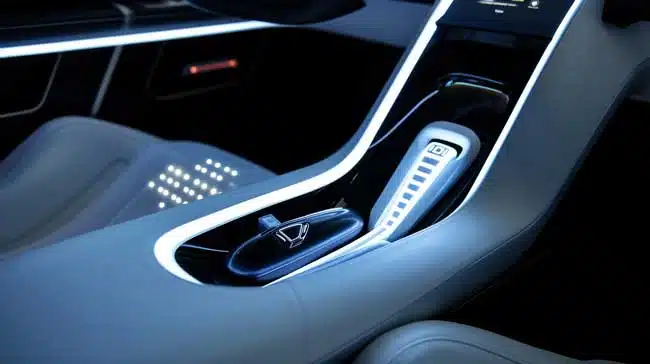
Electric Cars Are Driven Like Automatics
Most electric cars have two pedals: an accelerator and a brake. There is no clutch pedal and the driver does not need to change gears manually.
You normally select a driving mode such as Drive, Reverse, Neutral or Park, then control the vehicle in much the same way as a conventional automatic car.
Technically, many electric cars do not use a traditional automatic gearbox. Instead, the electric motor usually works through a single-speed reduction gear.
Why Do Electric Cars Not Need Manual Gears?
Electric motors can produce useful pulling power across a very wide range of speeds. That means the car can accelerate smoothly without needing the driver to change through several gears.
How Does an Electric Car Transmission Work?
Most electric cars use a single-speed transmission rather than a conventional multi-gear gearbox. The motor turns at a wide range of speeds, while a fixed reduction gear sends power to the wheels.
One main forward gear
The car does not need several forward gears for normal driving because the electric motor can work efficiently across a broad speed range.
Instant power delivery
Electric motors can respond very quickly when the accelerator is pressed, which gives smooth and immediate acceleration.
Fewer moving parts
A simpler transmission can reduce the number of components compared with a traditional manual gearbox and clutch system.
Reverse works differently
In many electric cars, selecting Reverse changes the direction of the motor rather than engaging a separate reverse gear.
Electric Car Driving Modes Explained
Electric cars may use a lever, dial, buttons or a touchscreen to select the driving mode. The layout varies, but the main options are usually familiar to automatic drivers.
What Is Regenerative Braking?
Regenerative braking allows the electric motor to help slow the car while converting some of the vehicle’s movement back into electrical energy.
The recovered energy is sent back to the battery. The amount of slowing varies between vehicles and may be adjustable through driving modes, paddles or settings.
Are Electric Cars Easier to Drive?
Many drivers find electric cars straightforward because there is no clutch pedal, no manual gear selection and no risk of stalling. However, the instant acceleration and regenerative braking can take time to get used to.
No clutch control
There is no biting point to manage, which can make hill starts, slow-moving traffic and junction work feel simpler.
No manual gear changes
The driver can concentrate on steering, observation, speed and road position without selecting gears.
Quick accelerator response
Electric cars can accelerate immediately, so smooth and progressive accelerator use is important.
Different slowing behaviour
Strong regenerative braking can make the car slow noticeably when the accelerator is released.
Quiet at low speed
Drivers must remain especially alert for pedestrians and cyclists who may not hear the vehicle approaching.
More technology to understand
Driving modes, charging settings and energy displays vary between models and should be learned before setting off.
Can You Drive an Electric Car on an Automatic Licence?
Yes. A standard electric car with no clutch pedal is treated as an automatic for driving-licence purposes.
A driver who passes the practical test in an electric car will normally receive automatic-only entitlement. They can drive automatic and electric cars, but not a manual car with a clutch pedal unless they later pass a manual driving test.
Manual Car or Electric Car?
Electric cars remove clutch and gear-selection tasks, but safe driving still depends on observation, planning, speed control and judgement.
Driver controls the gears
- Uses accelerator, brake and clutch pedals.
- Requires manual gear selection.
- Needs clutch control at low speed and when moving away.
- A manual test gives broader licence entitlement.
Driven like an automatic
- Usually uses accelerator and brake pedals only.
- No manual gear changes during normal driving.
- May use regenerative braking and one-pedal modes.
- An EV test normally gives automatic-only entitlement.
How Do You Charge an Electric Car?
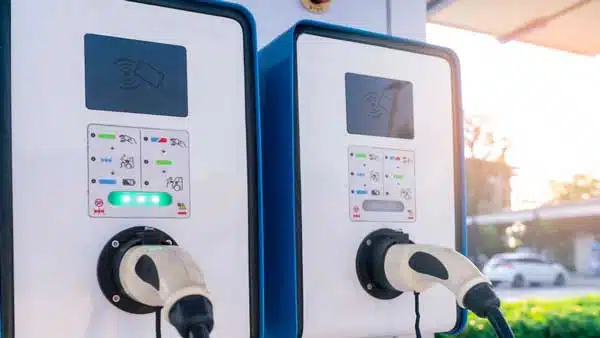
Electric cars can be charged at home, at work or using public charging points. The charging time depends on the vehicle, battery size, charger power and current battery level.
Home charging is convenient for drivers who have suitable off-street parking. Public chargers can be useful on longer journeys or when home charging is not available.
Before buying an electric car, check which connector it uses, the charging speeds it supports and whether local charging options suit your normal journeys.
What Affects Electric-Car Range?
The displayed range is an estimate rather than a guarantee. Weather, speed, heating, air conditioning, hills, traffic and driving style can all change how far the vehicle travels on a charge.
Driving speed
Higher speeds usually increase energy use and can reduce the distance available from the battery.
Cold weather
Low temperatures and cabin heating can reduce available range.
Heating and air conditioning
Climate-control systems use energy and can affect the remaining range.
Road and traffic conditions
Hills, strong winds, heavy loads and fast roads can increase energy consumption.
Driving style
Smooth acceleration, sensible speed and good planning can improve efficiency.
Battery condition
Battery age, temperature and general condition can influence usable capacity.
Will an Electric Car Suit Your Driving?
Electric cars can work brilliantly for many drivers, but the best choice depends on your journeys, parking, budget and access to charging.
Electric Car FAQs
Are electric cars automatic?
Electric cars are generally driven like automatic cars because they have no clutch pedal and do not require manual gear changes. Many use a single-speed transmission rather than a conventional automatic gearbox.
Do electric cars have gears?
Most electric cars use one main forward gear through a fixed reduction system. Some high-performance or specialist models may use more than one gear.
Do electric cars have a clutch pedal?
Standard electric cars do not have a clutch pedal. The driver normally uses only the accelerator and brake pedals.
Can I drive an electric car with an automatic licence?
Yes. A standard electric car without a clutch pedal is treated as an automatic for driving-licence purposes.
Can I drive a manual car after passing my test in an electric car?
Not on automatic-only entitlement. A practical test taken in an electric car will normally result in an automatic-only licence, so a separate manual test is needed before driving a manual car independently.
Are electric cars easier to drive?
Many drivers find them simpler because there is no clutch or manual gear selection. However, instant acceleration, regenerative braking and unfamiliar controls still take practice.
What is one-pedal driving?
One-pedal driving uses stronger regenerative braking so the vehicle slows significantly when the accelerator is released. The brake pedal must still be used whenever required.
How long does an electric car take to charge?
Charging time depends on the battery size, current battery level, charger power and the maximum charging rate supported by the car.
Interested in Automatic Driving Lessons?
Build confidence with junctions, roundabouts, parking and independent driving in an automatic car with a local instructor.